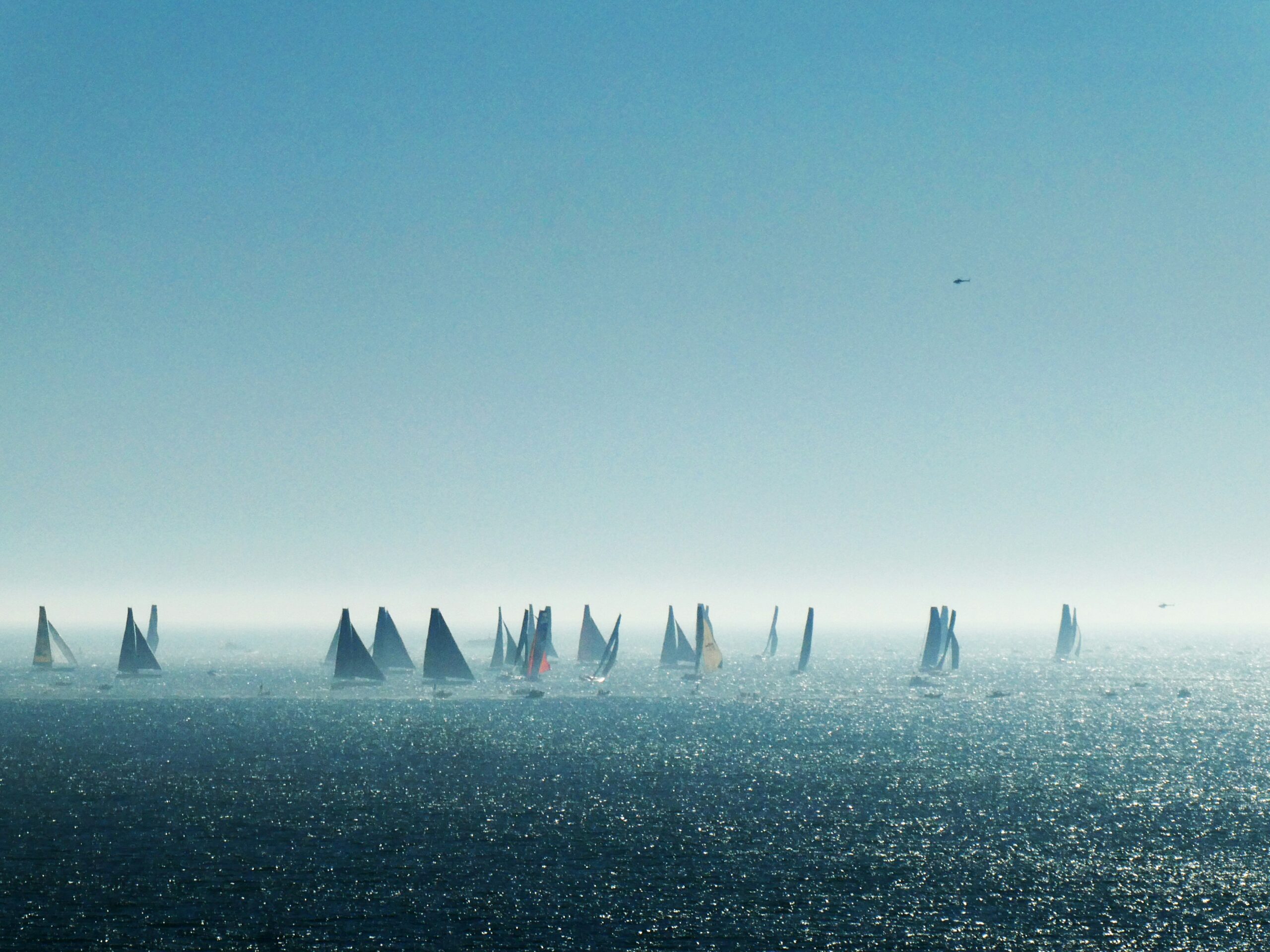
Every year, in the month of October, the famous Barcolana regatta takes place in the city of Trieste, attracting thousands of sailing boats to the Adriatic Sea and transforming the Gulf of Trieste into a natural theatre of sport and show.
The beauty and adrenaline of one of the most crowded regattas in the world offer an opportunity to address a highly relevant issue for those who regularly participate in sailing competitions: the legal framework governing civil liability in the event of collisions or damage between racing sailing boats.
The subject, both complex and fascinating, represents an intersection between yachting law, sporting regulations and general principles of civil liability.
The Italian Pleasure Navigation Code (Legislative Decree No. 171/2005) devotes particular attention to sporting events at sea, requiring, pursuant to Article 30, compliance with the regulations of the national and international sports federations organizing the event. The previous Law of 11 February 1971, No. 50 (“Rules on Pleasure Navigation”), which formerly regulated the subject, already provided that in sailing competitions the regulations of the Lega Navale Italiana, the Federazione Italiana Vela (FIV), the Federazione Italiana Motonautica and nautical clubs affiliated to the said federations had to be observed, thus recognizing the specificity of the subject and referring to the sporting rules of each individual discipline.
In the field of sailing competitions, in order to participate in a regatta, any boat should complete registration through specific forms binding each competitor to the observance of the Racing Rules of Sailing (R.R.S.) adopted by the Italian Sailing Federation (FIV), which gives effect to and applies the international Racing Rules of Sailing promulgated by World Sailing (formerly known as the International Sailing Federation – I.S.A.F.) headquartered in the United Kingdom (https://www.sailing.org). This is the international governing body for most sailing sports, particularly racing, which issues new editions of the Racing Rules of Sailing every Olympic quadrennium (the current version applies to 2025–2028).
These rules constitute a genuine “micro legal code” of sport, to which competitors adhere contractually through registration (thus entering into the so-called “race contract”). Consequently, they become the exclusive set of norms governing the relationships between competitors during the race and delineate, solely and exclusively, the scope of fault and liability in case of collision.
This means that, in the event of a collision between yachts engaged in a sailing race, the determination of liability must be carried out solely by applying and interpreting the aforementioned Racing Rules, excluding, as a general rule, the application of the provisions on liability for collision contained in Articles 482 et seq. of the Italian Navigation Code, the 1910 Brussels Collision Convention (upon which the Italian Navigation Code is based), and the International Regulations for Preventing Collisions at Sea (COLREG 72 – London Convention of 1972), which govern commercial or pleasure navigation but not competitive sailing events.
The fact that the Racing Rules govern the conduct of sailors during a regatta does not exclude the jurisdiction of the ordinary civil courts in favour of sports jurisdiction.
Indeed, should disputes arise between the competing yacht owners and/or their respective insurers concerning liability for a collision occurring during a regatta, jurisdiction over the ensuing litigation shall lie with the ordinary civil court.
Such court shall take into account the findings already established in the sporting venue regarding the responsibility for the collision (namely, the decision of the Protest Committee) or, in the absence thereof, shall interpret the facts in light of the Racing Rules of Sailing in force at the time of the incident.
Italian courts, when dealing with cases concerning collisions between yachts competing in regattas, have consistently held that:
“In such sporting events and related training sessions, if a collision occurs, the resulting liability must be determined, even by the judicial authority, on the basis of the Racing Rules of Sailing in force at that time.” (Chiavari District Court, 25 March 2004).
This principle was recently reaffirmed by the Trieste District Court in Judgment No. 454/2023, where the judge, called upon to assess liability in a collision occurring during the renowned Barcolana regatta, unequivocally held that:
“In the event of an accident between boats participating in a regatta, the general principles of civil liability set forth in Article 2054 of the Civil Code must be coordinated with the Racing Rules and the decisions issued by the Sports Jury. The general principle is that, in the case of a collision, the determination of the facts lies, for sporting purposes, with the race jury, while for compensation purposes it lies with the ordinary civil court, but it must nevertheless be carried out on the basis of the Racing Rules. In the present case, no protest was lodged; therefore, the sports committee did not rule on the dynamics of the collision, which the civil judge must reconstruct based on the evidence gathered.”
In accordance with the aforementioned R.R.S., when a breach of a racing rule occurs by a competitor, the opposing crew alleging such breach is required to lodge a formal “protest”, which shall be examined by the Protest Committee or Sports Jury. After due investigation and any hearings, the Committee shall issue a decision on whether a rule was infringed and, if so, impose the relevant penalties. Such decision shall constitute conclusive evidence in civil proceedings with regard to the circumstances and liability of the incident, and shall be binding upon the yacht found to be at fault and its insurers, whereas the assessment and quantification of damages shall remain within the exclusive jurisdiction of the civil court.
It should also be noted that, regarding the interpretation of the R.R.S., World Sailing, and in Italy the F.I.V., publish every four years the “Case Book”, which includes the full revision of all previously published cases and new ones adopted by the World Sailing Council, to illustrate as clearly as possible the application of the Racing Rules in the most controversial circumstances. Many of these cases are based on actual appeals submitted to national authorities pursuant to Rule 70.1 or requests for confirmation or correction submitted under Rule 70.2. Others, presented in a “question and answer” format, are based on hypothetical or presumed situations and often arise from queries submitted to the World Sailing Question and Answer Panel. This resource is undoubtedly valuable for judges, arbitrators, and race officials—both national and international—in determining rule infringements and in defending crews involved in formal protests. Moreover, as previously noted, it may also serve as a valuable reference for judges and court-appointed experts when called upon to determine liability for a collision in the absence of any sporting adjudication, by applying the relevant Racing Rules of Sailing.
This brief and certainly non-exhaustive analysis highlights how sailing regattas provide an extraordinary context for reflecting on the delicate balance between sporting competition and legal liability, where the interpreter must always reconcile the autonomy of the sporting legal order with the principles of civil law and maritime law, taking into account the inherent risks accepted in competitive sailing.
If you have suffered damage to your yacht or personal injury during a sailing regatta or wish to better protect yourself in the event of a maritime incident or when registering for a sailing competition, please contact the Firm to discuss your case.
Studio Legale Capece Minutolo
Avv. Gianmarco Capece Minutolo